

Running clean at a steady setting
A mini split left at one temperature cycles the way it should, pulling air through a clean coil and pushing it out evenly. No yellowing, no dust built up on the casing, just a unit doing its job quietly on the wall.
A local pro who services mini splits gets in touch about the tune-up.
Connect with a proSet your mini split to heat mode and somewhere around 68 to 70 degrees, and leave it there instead of turning it up and down through the day. The unit heats most efficiently running steady, because it idles along keeping the room at temperature rather than working hard to recover ground it lost. In a Maryland winter, where you'll see nights well below freezing, that steady setting also matters because the outdoor coil will frost up during normal operation and the system has to run a defrost cycle to clear it. That is normal and not a sign anything is wrong. What it means for you is that the house may feel briefly cooler during a defrost cycle, and that bouncing the thermostat around makes the unit work harder than it needs to with electric heat already costing what it does here. A unit that's maintained and set right will hold that temperature with less strain on the compressor through the cold months.




If you've been bumping the temperature up when you walk in and down when you leave, you've probably noticed the room never quite catches up, and the outdoor unit seems to run constantly without the air coming out of the vents feeling very warm. That's the unit struggling to recover instead of holding steady. You might also notice ice building up on the outdoor unit during cold snaps, which is normal for short stretches but shouldn't linger for days. A mini split working harder than it needs to pulls more electricity to do the same job, and on Maryland's winter electric rates that difference shows up on the bill before it shows up as a repair.

A mini split left at one temperature cycles the way it should, pulling air through a clean coil and pushing it out evenly. No yellowing, no dust built up on the casing, just a unit doing its job quietly on the wall.

Dust and yellowing on the casing usually mean the filter hasn't been cleaned in a while. A clogged filter makes the unit work harder to move the same amount of air, and that shows up on your electric bill before it shows up on the wall.

A mini split heats by moving heat from the air outside into your house, even when it's cold out. The outdoor unit has a compressor and a coil that pulls in whatever warmth is in the air, and the indoor unit's coil releases that heat into the room. Left at a steady setting, the system keeps up with a small, steady load. Pushed up ten degrees after sitting off or low, it has to run the compressor hard for a long stretch to catch up, and on a cold Maryland night that takes more from the unit and from your electric bill than the same heat delivered steadily would.
Maryland winters bring stretches cold enough that a mini split's output drops right when you're asking it to work hardest, which is part of why big swings in the setting hit harder here than in a mild climate. If you're not sure how your unit is handling those cold snaps, or whether the setting you've landed on is really the right one for the rooms it heats, a contractor who services mini splits can look at your specific system and tell you. That's a different question for every house and every unit, and it's worth having someone who knows your equipment answer it rather than guessing.

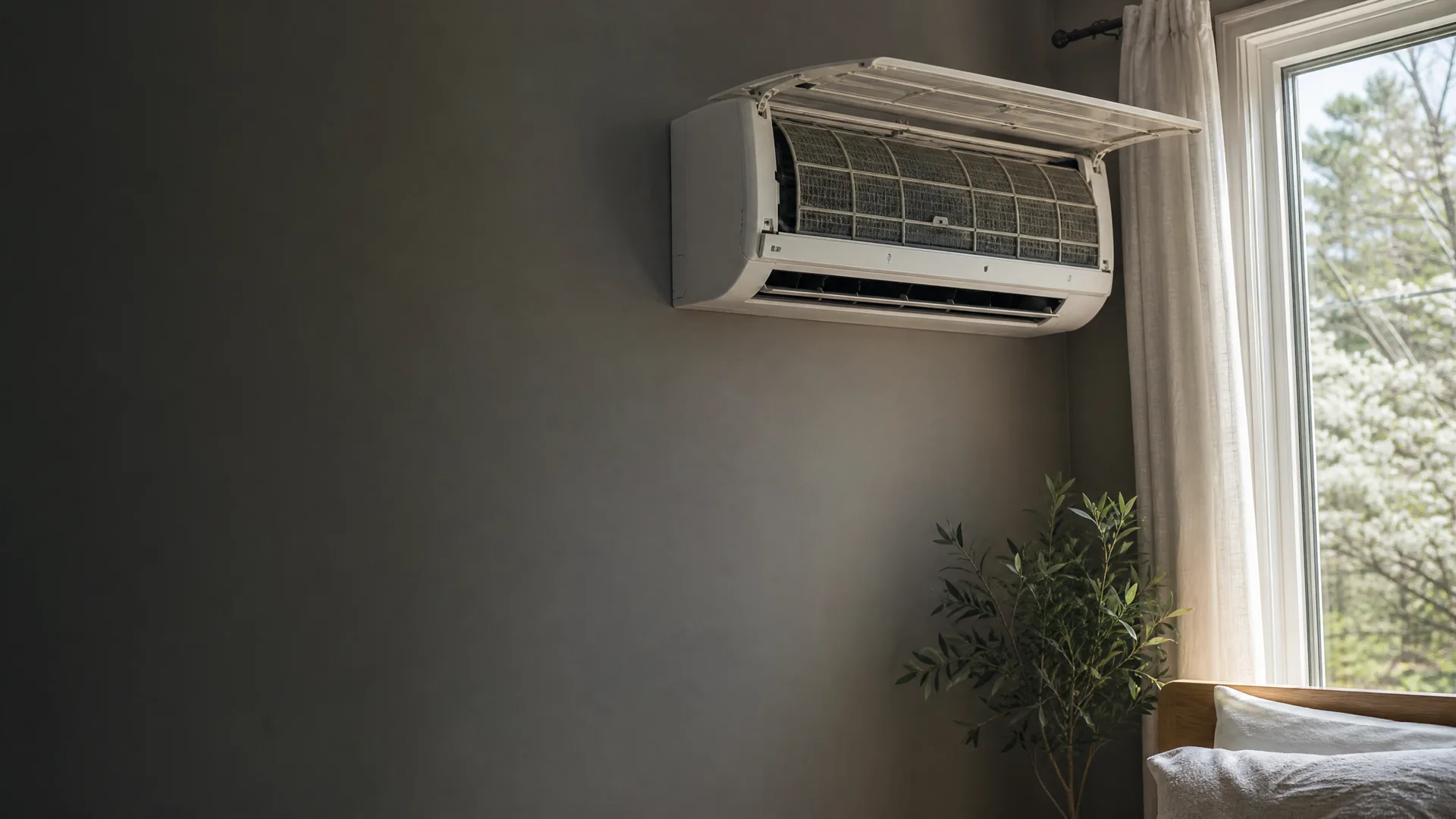
Late afternoon in March, sun still low through the blinds. You pop the front cover off the indoor unit to see why the bedroom's been running warm air that doesn't feel warm, and the filter screen is grey with dust, matted enough that you can't see through it in spots. You've had the thing set to heat mode all winter, steady around 69, just like you were supposed to, and it still strained to keep up some days. Maryland winters ask a lot of these units, and a filter that dirty is most of the reason this one's been working so hard. You snap a photo of it before you decide what to do next, because this looks like more than a rinse under the sink.
A mini split set right and left alone still needs its filters checked and its coil looked at before winter settles in for good. Dust and dirt build up behind the panel where you can't see them, and a unit working to push heat through a clogged filter runs longer than it should, which costs you on a power bill that's already high. Checking that yourself means pulling the cover off, figuring out what you're looking at, and knowing whether what you find is normal wear or something that needs attention. Finding someone to do it properly means searching for contractors who work on mini splits specifically, calling around to see who has time before cold weather hits, explaining the same setup over and over, and sorting through quotes that don't tell you much. Handing that off now means one contractor familiar with these units gets in touch, and you're not the one tracking down who's available while your heat runs harder than it needs to.


At that rate, every degree you nudge the heat up costs you for as long as it runs. Most Maryland homes heat with electricity, so a mini split held steady at 68 to 70 instead of swinging up and down is one of the few places you control what that bill turns into.
EIA-861 2025 statewide residential average
A mini split sized for the room reaches 68 to 70 and holds it by running the compressor at a low, steady speed. Push the setting to 74 because the room feels cool and the unit has to ramp the compressor up hard to close that gap fast. That's where the draw climbs. It's not that a higher number is wrong, it's that reaching for it quickly costs more than the few degrees would suggest, especially on a January night when the outdoor unit is already working to pull heat from cold air.
The indoor unit reads the room temperature and tells the outdoor compressor how hard to work to close the gap. Set it and leave it, and that gap stays small, so the compressor barely has to vary its speed. Move the setting around through the day and the gap keeps reopening, forcing the compressor back up to a higher speed each time. Maryland winters bring enough cold stretches that this happens often if the setting changes often. A compressor running at a steady, lower speed all day draws less than one cycling between low and high.


Set your mini split to heat mode, somewhere around 68 to 70 degrees, and leave it there. That's the whole answer. The reasoning behind it is just as simple. A mini split heats by pulling warmth out of the outside air, and it does that most efficiently running at a low, steady speed rather than being pushed hard every time someone bumps the dial. Every time you raise it because the room feels cool, the compressor has to ramp up to close that gap, and every degree above 70 adds to what it costs you for as long as it runs that way. In Maryland, where most homes heat with electricity and power isn't cheap, that steady setting is one of the few things on the bill you actually control.
But the setting only does its job on a unit that can breathe. A filter packed with dust or a coil caked with grime makes the system strain to hit 68 even when nothing's wrong with how you've set it. So the setting and the upkeep aren't two separate things, they're the same answer looked at two ways. Hold the temperature steady, and have the filter and coil checked before winter sets in for good. Do both, and the unit you're running is doing the least work it can to keep the house at the temperature you actually want, which is the whole point of having it.


The right pro for this job
Skip calling around to set up a mini split tune-up.
