







Profile view of a bearded man wearing a black baseball cap and a dark gray T-shirt against a plain light background.

Can a mini split heat a basement in a Maryland winter

Step 1 of 3: Equipment

Yes, a mini split can heat a basement through a Maryland winter, but it has to be sized and installed for that job, not just hung on a wall. Basements lose less heat than rooms above ground because the surrounding soil stays warmer than the outside air, so a mini split often has an easier time down there than people expect. The issue is cold snaps. When outdoor temperatures drop into the teens or lower, a standard heat pump's output falls off, and a basement that felt warm in November can feel short on heat in January. A cold climate mini split, rated to keep producing heat well below freezing, holds up where a standard model won't. Placement matters too. The indoor unit needs to sit where it can actually move air across the space, not get blocked by a stairwell or a far corner that never feels it. Get the unit and the sizing right for your basement and it will carry you through the winter.

A dusty, discolored wall-mounted mini-split air conditioner unit near the ceiling of a plain beige interior wall.
Before you get your mini split installation
A white wall-mounted mini-split air conditioner installed near the ceiling on a plain beige interior wall.
After you get your mini split installation

A mini split doesn't make heat the way a furnace does. It moves it. The outdoor unit pulls warmth out of the air outside, even on a cold day, and sends it inside through refrigerant lines to the indoor head. When the outdoor temperature drops low enough, the outdoor unit will pause and run a short defrost cycle to clear frost off its coil before it goes back to heating. That's normal, not a sign something's wrong. Inside, the head mounted in your basement has to be sized for that room on its own, accounting for its square footage, its ceiling height, and whether it has a walkout door or window wall letting in more cold than a fully below-grade basement would. Where that head sits matters too. Basement air that's cold tends to sit low, so the unit needs to be placed where it actually pushes air into the space people use, not just toward the stairwell. And because capacity drops as outdoor temperatures fall, the unit installed has to be rated to keep producing heat on Maryland's coldest nights, not just the mild ones.

How a mini split actually keeps a basement warm

  • A mini split heats by moving refrigerant between the outdoor unit and the indoor head, pulling warmth from outside air even when it's cold out.
  • Below freezing, the outdoor unit runs a defrost cycle that briefly reverses to melt frost off its coil, then switches back to heating.
  • The indoor head in your basement needs to be sized to that room alone, since basements lose heat slower than rooms above ground but still need coverage for their square footage and ceiling height.
  • Cold basement air sits low and near the floor, so the head should be mounted where its airflow actually reaches the space people use, not just near the stairs.
  • A basement with a walkout door or window wall loses more heat than one fully below grade, which changes what size unit it needs.
  • Below a certain outdoor temperature, most mini splits lose capacity, so the unit has to be rated to keep up on the coldest nights Maryland sees.
A white wall-mounted mini-split air conditioner installed high on a beige interior wall near the ceiling molding, with a light curtain and curtain rod at the left edge.
A mini split sized for your basement keeps pulling heat out of the winter air, even on a 20-degree night.
A wall-mounted mini-split air conditioner indoor unit with a discolored cream plastic casing and dusty outlet vanes, installed high on a plain light-colored interior wall near the ceiling.
A unit that's too small, or wasn't installed for your basement, runs constantly and still leaves the room cold.
  1. A contractor measures your basement to size the unit correctly.

  2. The outdoor unit mounts on a pad or bracket outside.

  3. A line set carries refrigerant through the wall to the indoor head.

  4. The indoor head is mounted and the system is charged and tested.

Why does the basement still feel cold with the mini split running

You've got the mini split set to a decent temperature, but you walk downstairs and the air still feels damp and cool, especially in the corners away from the indoor head. Maybe it's running almost nonstop, the outdoor unit never seems to shut off, and the room still hasn't caught up by evening. Sometimes the indoor head is blowing air that doesn't feel warm at all. If the basement is where anyone sleeps, does homework, or spends a chunk of the day, a unit that can't keep up means that person is cold for most of the winter, and running it harder doesn't fix an undersized unit. It just raises the bill without raising the temperature.

A white wall-mounted mini-split air conditioner unit near the ceiling on a plain light-colored interior wall with open space to the right.

Cold air sinks into basements

Basements run colder than the rest of the house because cold air is denser and settles low, and because a basement has less exposure to the sun warming its walls. A mini split head placed low or aimed at the floor works against that, pushing warm air down to mix with the cold layer instead of just heating the ceiling area.

A white wall-mounted mini-split air conditioner unit installed near the ceiling on a plain beige interior wall, with a light curtain at the right edge.

Heat output drops as it gets colder

Every mini split has a capacity rating tied to outdoor temperature, and that number falls as the air outside gets colder. A unit picked to match your basement's heat loss on a mild day can fall short once Maryland hits a stretch of nights in the 20s, which is why sizing has to account for the coldest nights, not the average ones.

Single-Zone Basement Unit Or Multi-Zone System

Single-zone unit

  • One indoor head covers the basement only, sized to that room's square footage and ceiling height.
  • Installation cost stays lower since there's one line set and one outdoor unit to mount.
  • The rest of the house keeps whatever heat it already has, so the basement is the only space gaining a new source.
  • If the basement is finished and closed off with a door, a single head can hold its temperature without fighting heat loss to open stairwells.
  • A single unit gives you one thermostat to manage for that room, separate from the rest of the house.

Multi-zone system

  • One outdoor unit feeds two or more indoor heads, so the basement can run off the same system as a first-floor room or bonus space.
  • Each zone gets its own thermostat, so the basement can run warmer or cooler than the rooms it's paired with.
  • More line sets and more wall penetrations mean more for a contractor to route and seal during installation.
  • Since Maryland homes mostly heat with electricity, running one outdoor unit for several zones can cost less to operate than running several single units.
  • If the basement shares a zone with a drafty or open space upstairs, that zone works harder and the basement may not hold heat as well on its own.
A woman in a knitted shawl sits in a living room with a fireplace, shelves, a sofa with cushions, and a lamp by a bright window, looking off to the side.
A woman with long brown wavy hair in a green shirt over a white top stands in a living room with built-in white shelves, a ceiling fan, a potted plant and a sliding glass door.
A woman with shoulder-length gray-streaked hair in a light gray knit sweater stands smiling and looking off to the side in a living room with a sofa, houseplant, framed picture, and sunlit sliding glass door.
A woman with shoulder-length curly gray hair wearing a gray knit sweater stands near a window with a sheer curtain, looking to the side, with a blurred interior room behind her.

Skip calling around

Sizing a mini split for a Maryland basement isn't a job for guesswork, and getting it wrong means a cold room and a high bill all winter, since electric heat here already costs more per hour than gas. Finding someone who installs these correctly means calling around, explaining your basement's layout and square footage more than once, then weighing quotes that may not even be sizing the job the same way. A local contractor who installs mini splits every winter has already seen what undersized units do in basements like yours and what the fix looks like before the first frost. Sending one request means one contractor looking at your basement, not five voicemails to return. With Maryland winters cold enough to push a mini split into regular defrost cycles, and your power bill already carrying the load of electric heat, getting the sizing and installation right from the start matters more here than it would somewhere milder.

A single-story house with gray vinyl siding, dark shingled gable roofs, and white-trimmed windows, set behind a partly dry green lawn under a clear blue sky.

Summers here run humid, with the dew point averaging 64°F across June, July and August, based on weather data for Maryland. That's the kind of air that feels heavy just standing in it. A mini split installed to heat your basement well also has to pull that moisture out of the air come summer, and the two jobs depend on the same sizing work. A unit matched to the room handles both: warm air in winter, dry air in summer. One that's oversized for the space will cool the basement fast without running long enough to wring the damp out of the air, so the room feels cool and clammy at once, even with the unit running.

NASA POWER T2MDEW county cells weighted by homes

Does a mini split heat a basement differently than a gas furnace would

You've had a gas furnace upstairs for years, and now you're looking at a mini split for the basement. It seems like a different way of making heat, and you want to know if that difference matters for how the room actually feels, not just how the bill looks.

Yes, a mini split heats steadily instead of in bursts the way a furnace does

A furnace burns gas, heats air in short bursts, then shuts off until the room cools again. A mini split runs its compressor at varying speeds, so it keeps moving warm air into the room without the on-off cycle. That usually means less temperature swing in the basement, where cold air already settles and can make the room feel uneven near the floor. A furnace also depends on ductwork reaching the basement well, which isn't always the case in Maryland homes where the basement was finished after the ducts went in. A mini split skips that problem since the indoor head heats the room directly, with no duct run to lose heat along the way.

A white wall-mounted mini-split air conditioner unit installed high on a light gray interior wall near the ceiling, with a white-framed window and green foliage visible at the left edge.

Running clean and sized right

This is what a correctly sized mini split looks like doing its job. The head pulls air in, warms it, and sends it back out quiet and steady. Nothing to notice, which is the point. The basement holds its temperature on the coldest nights without the unit straining.


A dusty white wall-mounted mini-split air conditioner installed high on a beige interior wall below a molded ceiling trim.

Neglected and struggling

Dust and grime on the casing mean the filter behind that open panel is just as dirty. A clogged filter blocks airflow, so the head works harder to push out less heat. Left like this through a Maryland winter, the unit runs longer to keep the basement at the same temperature.

Power costs 19.53 cents per kilowatt-hour statewide

At almost 20 cents a kilowatt-hour, every hour your mini split runs downstairs shows up on the bill. A unit sized right for your basement heats it without running longer than it needs to. One that's too small just keeps drawing power and still leaves the room cold.

EIA-861 2025 statewide residential average

A woman with her hair in a bun holds a sleeping young child against her chest, both wrapped in a textured beige knit blanket on a sofa in a dimly lit room with a lamp, framed picture, and bookshelf behind them.
An older woman with gray hair in a bun and glasses, wearing a beige knit sweater, smiles while looking to the side in a warmly lit kitchen, with a loaf of bread on the counter in the foreground and a snowy scene outside the window.
A closed silver laptop and a ceramic mug of dark coffee sit on a wooden table in front of two chair backs, with a kitchen counter, tiled backsplash, wooden cutting boards, a vase of greenery and a potted plant by a window behind.

A mini split can keep your basement warm all winter

A mini split sized and installed for your basement will hold its own against a Maryland winter, even on the coldest nights. The soil around the basement walls helps, and the unit does the rest, as long as it was chosen for that room and not just mounted because there was a wall for it.

Getting there usually means more than one phone call. You'd be checking licenses, asking each contractor the same questions about sizing and placement, and waiting on a few quotes to see who actually knows basements. A local contractor who installs these every winter has already seen what makes a basement unit fall short, and sizes around it before the line set ever goes in.

A gray upholstered sofa with a matching cushion sits beside a potted plant and a wooden table holding a small green plant in a stone pot, near a curtained window.
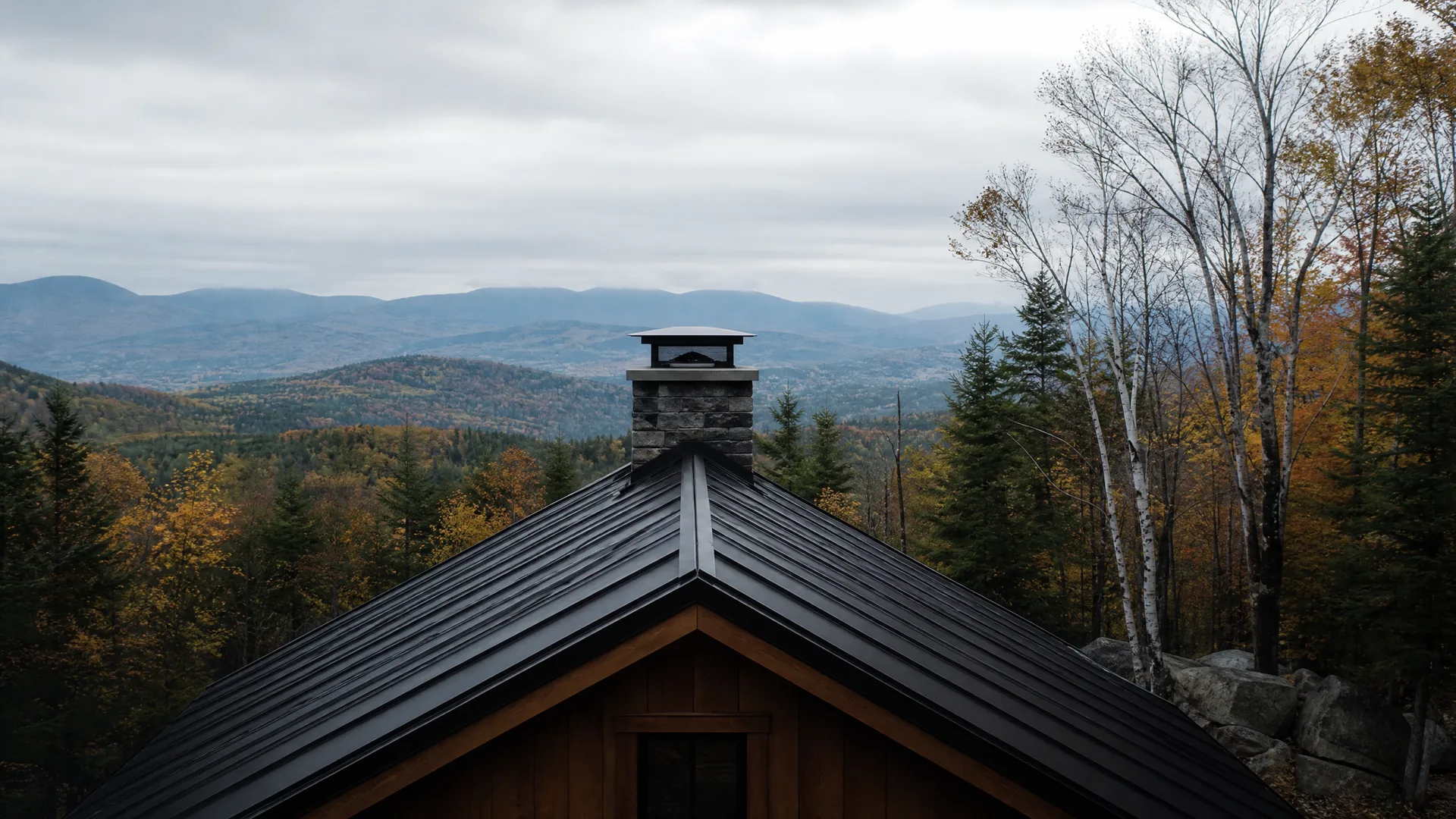
Elevated view over a dark standing-seam metal roof with a stone chimney and wood-sided gable, surrounded by conifers and autumn-colored trees with forested hills under an overcast sky.

Describe it once

Fill out one form

You only hire the pro if you want to.

A basement that stays cold all winter is still drawing power trying to heat itself. One visit from a contractor who sizes and installs the unit right fixes that for every winter after, not just this one.