A white wall-mounted mini-split indoor unit on a gray interior wall above a beige sofa, with a framed picture, a floor lamp, wood slat wall trim, and a window showing green foliage.

A local pro for your mini split repair

What defrost mode means on a Maryland mini split

When your mini split shows "defrost" and blows cold air, it's clearing ice off the outdoor unit so it can keep heating. It's normal in cold weather, but it shouldn't run long or often. This page gets into what's normal and what points to a real problem worth having a local pro look at.

Get matched

Defrost mode means the outdoor unit built up ice and the system is melting it off. During Maryland winters, cold damp air passing over the outdoor coil can leave a thin layer of frost, and left alone that frost turns to ice that blocks airflow across the coil. So the mini split pauses heating, reverses briefly to send warm refrigerant through the outdoor coil, and that's why you feel cool air inside and sometimes see steam rising off the outdoor unit. A normal defrost cycle runs for a few minutes every hour or two in cold weather, then the system goes back to heating. If it's running defrost constantly, staying in it for a long stretch, or the outdoor unit still looks iced over afterward, something isn't clearing the way it should. That usually points to a low refrigerant charge, a failing defrost sensor, or a fan that isn't moving air the way it needs to. Since most homes here heat with electricity, a mini split stuck in defrost too often is also a mini split costing you more to run.

A white wall-mounted mini-split air conditioner on a beige interior wall, with a window at left showing trees and a wooden fence, and dark wood flooring below.
Defrost cycles end in ten to fifteen minutes and the fan outside starts moving air again once the ice is gone.
A white wall-mounted mini-split air conditioner indoor unit with dark louvered vents, installed near the ceiling on a beige wall below white crown molding.
Ice that doesn't melt back, a coil caked white, or a unit stuck in defrost for an hour points to a sensor or valve that needs a look.

How the defrost cycle works

  • The outdoor unit reverses the refrigerant cycle during defrost, running briefly as an air conditioner to pull heat into the coil and melt the ice.
  • That's why the indoor head blows cold air for a few minutes, even though your thermostat is calling for heat.
  • A sensor on the outdoor coil tracks temperature and tells the control board when frost has built up enough to trigger the cycle.
  • The outdoor fan stops turning during defrost so it doesn't blow cold air across the coil and slow the melt.
  • Once the coil sensor reads a set temperature, the board switches the system back to heating and the outdoor fan restarts.
  • Humid air near the Chesapeake and coastal Maryland holds more moisture, which can mean more frequent defrost cycles on damp winter days.

The system is a heat pump, and a heat pump can run in reverse for a few minutes without anything being wrong. When the outdoor coil gets too cold, the control board flips a reversing valve and sends hot refrigerant outside instead of inside. That's the same valve that lets the same unit cool your home in summer. For those few minutes, the outdoor coil gets hot enough to melt the ice while the indoor head loses its heat source, which is why the air coming out feels cold. The outdoor fan shuts off during this, since moving cold outdoor air across the coil would fight the melt instead of helping it. A temperature sensor clipped to the outdoor coil is what tells the board when defrost needs to start and when it's done. Once that sensor reads the coil has warmed past freezing, the board reverses the valve again, the fan outside kicks back on, and warm air starts coming from the indoor head again. None of this needs you to do anything. Where you live matters here too. Air coming off the Chesapeake or the coast carries more moisture than dry inland air, and that extra humidity tends to frost the coil faster on cold, damp days, so you may notice the system defrosting more often during a wet cold snap than during a dry one at the same temperature.

A woman in a gray turtleneck sweater stands by a window looking outside at snowy ground, with a dimly lit living room containing a sofa, shelves, lamp and a lit candle behind her.
A woman in a cream cable-knit turtleneck sweater stands in a warmly lit living room with a fireplace and shelves behind her, looking out a window toward snow-covered trees and a railed deck.
A woman in a cream knit turtleneck sweater stands by a window looking out at snow, with a lit fireplace, sofa and lamp in the room behind her.
A woman in a gray knit sweater sits by a window looking out at falling snow, with a dimly lit living room containing a sectional sofa, pillows, a lamp and houseplants behind her.

Get the right pro for your mini split

A mini split stuck in defrost too long isn't heating your house, it's just running the outdoor unit while cold air blows inside. With electric heat and Maryland power rates, that's a system working against itself on top of what it's already costing you to run. A frozen coil that won't clear usually means a defrost sensor or a reversing valve isn't doing its job, and that's not something to leave alone through a Maryland winter. Someone who works on mini splits all season in this area has likely seen the same unit stuck the same way and knows what to check first, the sensor, the valve, or the control board telling the system to flip back. Getting one local contractor looking at it, instead of guessing or waiting it out, is how you find out whether what you're seeing is normal defrost behavior or a part that's failing. Start with the button above and get someone who knows this equipment on it.

A dim room with a wall-mounted mini-split air conditioner above a water stain running down the gray wall to a towel on the wood floor, with a black shelving unit, a desk with a lamp and potted plant by a window, and an office chair at right.

You're at the desk working through a cold January afternoon when you notice the wall under the indoor unit has gone dark and wet, a streak running down toward the baseboard. You already put a towel down last week for the same thing. The mini split has been short-cycling into defrost every twenty minutes or so, longer each time, and this one ran well past fifteen minutes. Outside, the coil has a crust of ice that didn't fully clear. The room never quite warmed up, and now there's water getting into the drywall instead of draining where it should. You turn the thermostat down, not up, because you've learned by now that leaving it running only adds to the stain.


Is your mini split defrosting too much, or too long?

Watch the indoor head during a cold stretch. If it blows cold air for a few minutes every hour or two, then switches back to warm, that's a normal defrost cycle. If it's blowing cold for longer stretches, or the warm air in between barely lasts before it drops back into defrost, the system is losing ground. You might notice the room not holding its temperature, the outdoor unit running almost constantly, or ice visible on the coil even after a cycle finishes. Left alone, a unit that can't clear ice properly keeps drawing power to run a cycle that isn't working, and the room it heats falls further behind on a cold night.

A white wall-mounted mini-split indoor unit installed high on a gray interior wall, with a window at left and part of a light gray sofa with a dark cushion at lower right.

Defrosting normally

The unit cycles into defrost on its own, clears the coil, and goes back to heating without you doing anything. The outdoor fan stops, then starts again once the ice is gone. Indoors, the head looks clean and sits flush against the wall, and the air coming out turns warm again within minutes.

A white wall-mounted mini-split air conditioner indoor unit with visible dust and staining along its lower vent, installed on a plain pale wall.

Stuck or neglected

Dirt and mold along the vents and lower casing mean airflow across the coil is already restricted before defrost even starts. A unit working that hard to move air tends to run defrost longer and more often. If yours looks like this, a contractor who services mini splits in Maryland can check whether buildup or a failing part is behind it.

A bearded man in a plaid flannel shirt stands in a kitchen looking out a window toward snow-covered shrubs, with a steaming mug on the windowsill and potted plants on a shelf behind him.
A smiling man with dark curly hair in a navy t-shirt sits on a gray couch indoors, with a large-leafed plant and a window in the background.

The reversing valve is what sends refrigerant backward during defrost, and it's the part that sticks or fails after years of switching back and forth all winter.

A stuck reversing valve can leave a mini split running one direction only, heating fine until the next cold snap calls for defrost and nothing happens.

Power costs 19.53 cents per kilowatt-hour statewide

At 19.53 cents per kilowatt-hour, a mini split stuck cycling in and out of defrost adds up fast since most Maryland homes already run electric heat. A unit that defrosts every hour instead of every few is pulling extra power all day without actually warming the house.

EIA-861 2025 statewide residential average

A man seen from behind raises his hand to wave at a woman standing in the open front doorway of a single-story house with gray shingle siding, white columns and a gabled porch entry.

Defrost is the system clearing ice so it can keep heating

A short defrost cycle now and then is the mini split doing its job. The outdoor unit frosts up, reverses itself for a few minutes to melt that ice, then goes back to warming your house. If that's what you're seeing this winter, nothing here needs fixing.

What's worth a second look is a unit that won't come out of defrost, a coil caked in ice instead of clear, or an indoor head blowing cold air long after it should have switched back. That points to a part, maybe the reversing valve, maybe a sensor, that a local contractor who services mini splits all winter would recognize fast because they've seen it fail before. If your situation matches that, the next step is getting matched with one contractor near you in Maryland, not a handful of companies competing for your callback, and having them reach out to look at your specific unit.

A living room corner with a beige upholstered armchair holding navy and striped cushions, a small round wooden side table with a carved bowl and a potted green plant, a framed landscape picture on a pale wall, built-in shelving, and a curtained window.
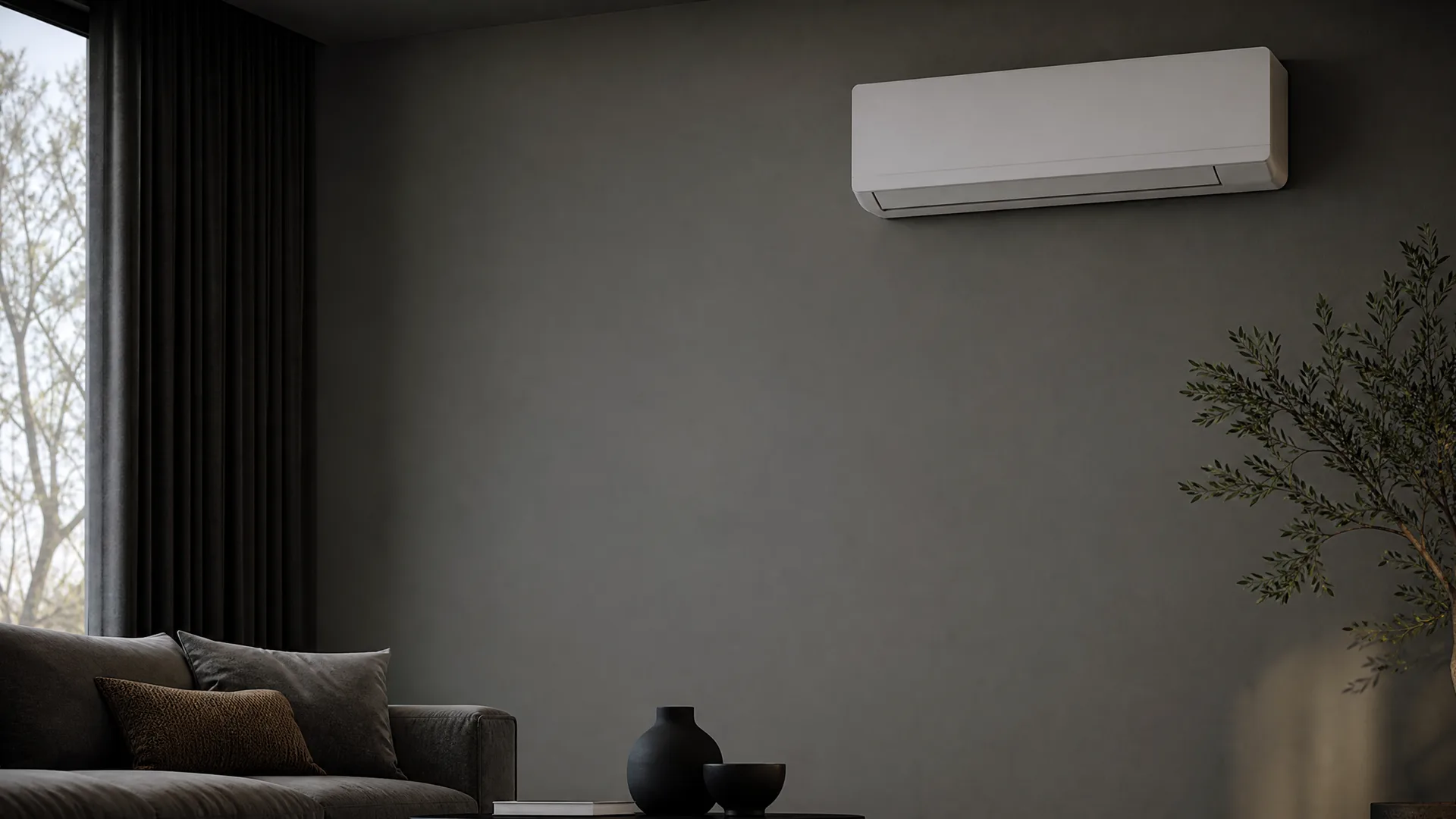
A white wall-mounted mini-split air conditioner on a dark gray interior wall above a gray sofa, with a window and curtain at left, a potted olive-like plant at right, and a black vase and bowl on a table in the foreground.

A pro who works on mini splits

The pro who reaches out is licensed in Maryland.

Step 1 of 3: Equipment