

Sized right, it keeps up
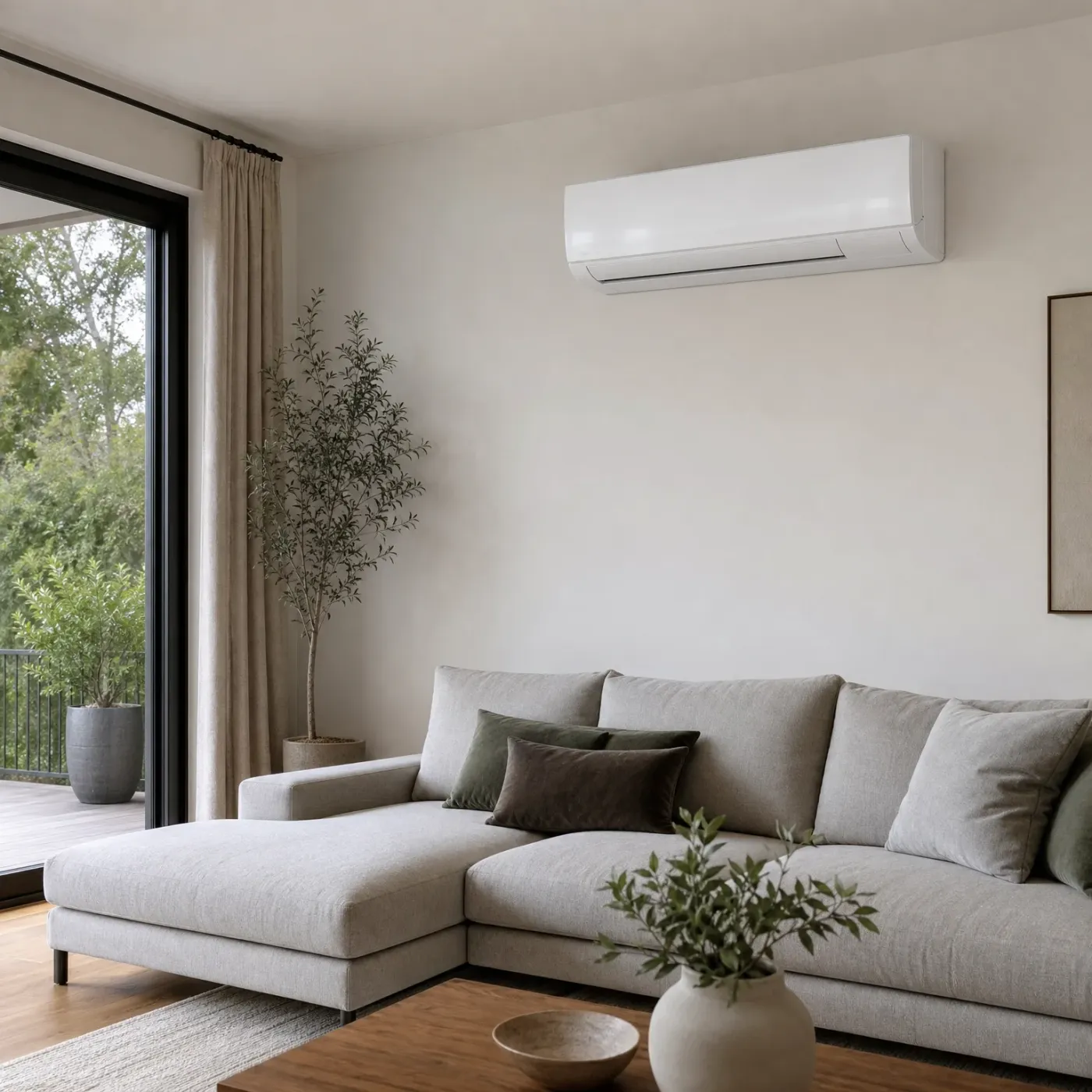
This is what a mini split doing its job looks like. The vane is open, the panel is clean, and it's holding the room steady through a sticky Maryland afternoon without running nonstop to get there.
Once you send the form, finding a pro is off your list.
Hand it offYou want a number before you call anyone, something close enough to go on. A mini split that's too small will run constantly through a Maryland summer and never quite catch up, and one that's too big cools the room fast but leaves it clammy, since it shuts off before it pulls the moisture out of the air. Either way you feel it in the room and in the bill.
A 400 square foot room points to a 9,000 Btu unit, 600 square feet to 12,000, and so on, but that's a starting point, not the answer. A contractor sizes it with a load calculation that accounts for how much sun the room gets, how the walls and attic are insulated, and how many people and appliances share the space. Maryland's humid summers make this worth getting right. An oversized unit cools the air quickly but cycles off before it pulls the moisture out, so the room feels cold and damp instead of comfortable. Since most homes here heat with electric heat in winter too, a mini split that's matched to the space properly runs less and costs less to keep running both seasons.





This is what a mini split doing its job looks like. The vane is open, the panel is clean, and it's holding the room steady through a sticky Maryland afternoon without running nonstop to get there.

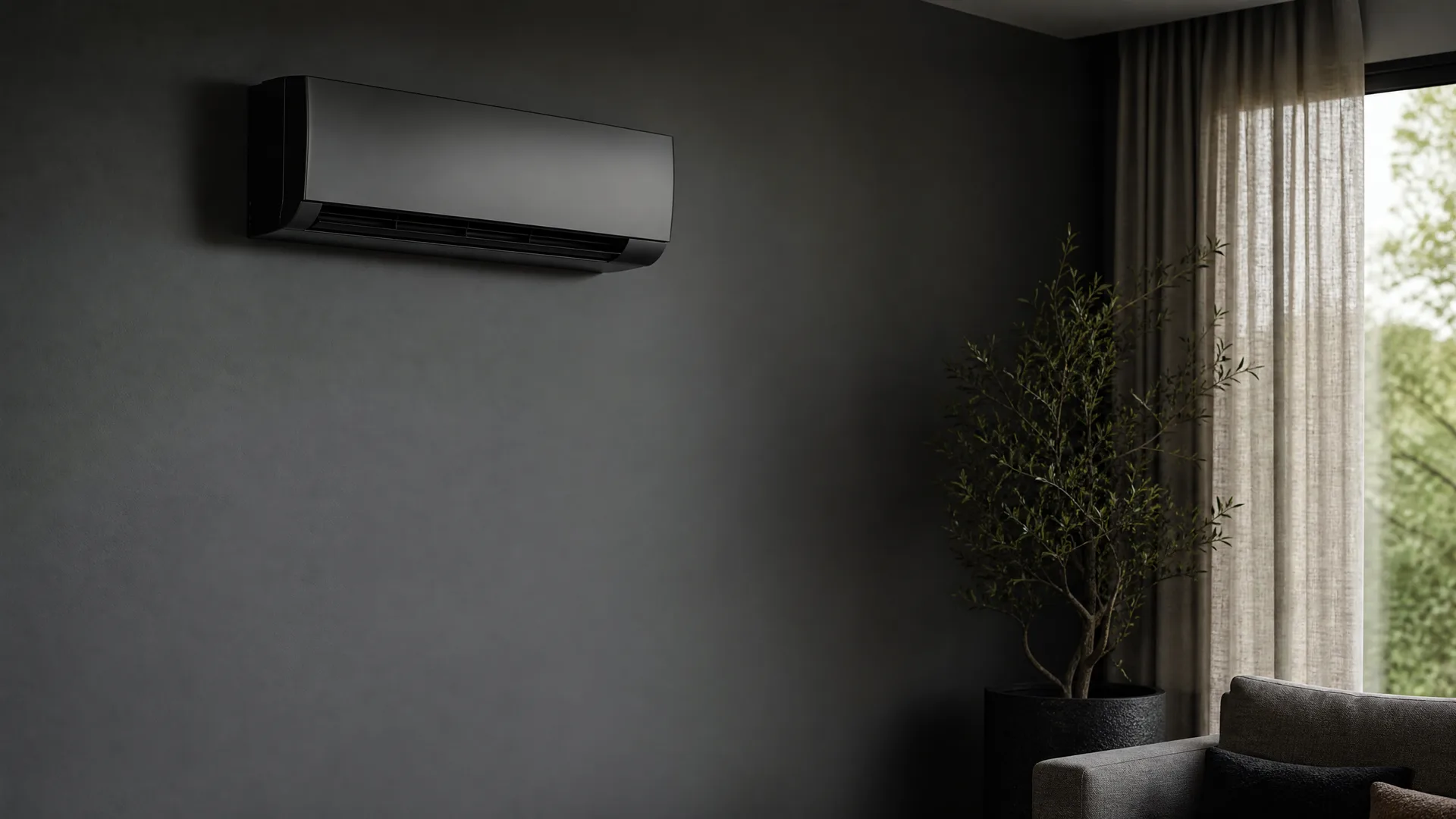
That buildup on the housing isn't just dirt. A unit caked like this is pulling air through a dirty coil, and if it was undersized to begin with, it's been straining long before the grime made it visible.
You notice it in the afternoon, when the house should be cool and it isn't quite. The unit is running, the air coming out feels fine, but the room never settles at the temperature on the remote. Maybe it short cycles instead, shutting off a few minutes after it starts, then kicking back on before the room has really cooled. You might hear it working harder than it used to, or notice the electric bill climbing past what a Maryland summer usually costs you. A mini split fighting a room that's too big for it won't pull the moisture out of the air either, so the house can feel damp even while it's cooling, which over a season leaves windows sweating and corners smelling musty.




Describe the project once instead of to every installer.
After you send the request, you're done searching.
No charge to send it. You decide if you hire them.

A mini split doesn't heat or cool at one fixed output. The compressor is inverter driven, so it ramps up when the room is far from the setpoint and settles down to a lower, steady output once it's there. That's different from the old on-off cycle of a window unit. A correctly sized unit spends most of its time at that low, quiet output, barely working. An undersized one never gets to coast. It stays pinned near full output trying to close a gap it can't close, which is why an undersized unit in a Maryland July runs loud all afternoon and still loses ground.
Getting that sizing right takes more than square footage. A contractor doing a load calculation is weighing window orientation, ceiling height, and how the room holds heat, and matching that against the indoor and outdoor unit together, since they're rated as a pair. That's the kind of judgment call that doesn't come from a chart you find online. Once you send the form, the matching to someone who can actually run that calculation for your home is off your plate, no calling around to find who covers your county.

A contractor measures every room the system needs to cover.
That measurement sets the BTU load the equipment has to meet.
Window direction, insulation, and ceiling height adjust that load up or down.
The indoor head and outdoor compressor get matched to the final number.


An undersized mini split spends a muggy Maryland afternoon chasing a setpoint it can't reach. The compressor stays at or near full output for hours instead of ramping down, because the room keeps gaining heat faster than the unit can remove it. That constant high-speed running costs more to operate over a summer than a unit sized to the room, and it wears on the compressor sooner. You'll notice it as a room that feels close but never quite settles, even with the unit clearly working the whole time.
A mini split sized too big for the room cools the air fast and shuts off before it's run long enough to pull the moisture out of it. Maryland summers are humid, and that moisture removal depends on the unit running a steady cycle, not a short one. The result is a room that reads cool on the thermostat but still feels damp. It also means more on and off cycling, which is harder on the equipment than one longer, steady run would be.
At 19.53 cents a kilowatt-hour, a mini split that's running flat out because it's undersized shows up on your bill fast. Get the size right and the compressor spends most of the day idling low instead of maxing out, which is what keeps that number manageable.
EIA-861 2025 statewide residential average
The right size for your mini split comes down to the room it's covering, the windows and insulation around it, and how that load changes with a Maryland summer pushing against the walls all afternoon. No two rooms land on the same number. That's why a contractor measures rather than guesses, and why a sizing chart off the internet only gets you so far. Once you know that, the only thing left is getting someone out to measure your space and match the equipment to it. That part doesn't have to fall on you. Instead of calling around to different companies, explaining the room and the problem again to each one, and sitting with a pile of quotes trying to figure out which contractor actually knows what they're doing, you can send one form and let someone else carry that search. The sizing question has an answer. Getting it installed right is the part still ahead of you, and you don't have to find who does that alone.
Skip collecting and comparing quotes for the new mini split.