
Why your mini split has ice on it in a Maryland winter

Step 1 of 3: Equipment

Why does my mini split have ice on it in winter?

You run the mini split in January and February to keep the house warm, and when you check the outdoor unit there's a layer of ice building up on the coil or the pipes. It keeps running, but something about seeing ice form while it's supposed to be putting out heat makes you want to know if this is normal or a sign it's breaking down, especially with how much you're already paying to run it through a Maryland winter.

Some frost is normal, a thick or spreading layer isn't

A mini split pulls heat out of the cold outdoor air to warm your house, and in the process the outdoor coil gets cold enough that moisture in the air freezes onto it. That's why you'll see frost on the unit on damp, near-freezing days, which Maryland gets plenty of from December through February. The system is built to handle this. It runs a defrost cycle on its own, switching briefly to cooling mode to melt the ice, then goes back to heating. The problem is when the ice keeps building instead of clearing, covering the coil or climbing up the lines. That points to something stopping the defrost cycle from doing its job, and it means the unit is working harder and heating less while electric rates keep climbing on the bill.

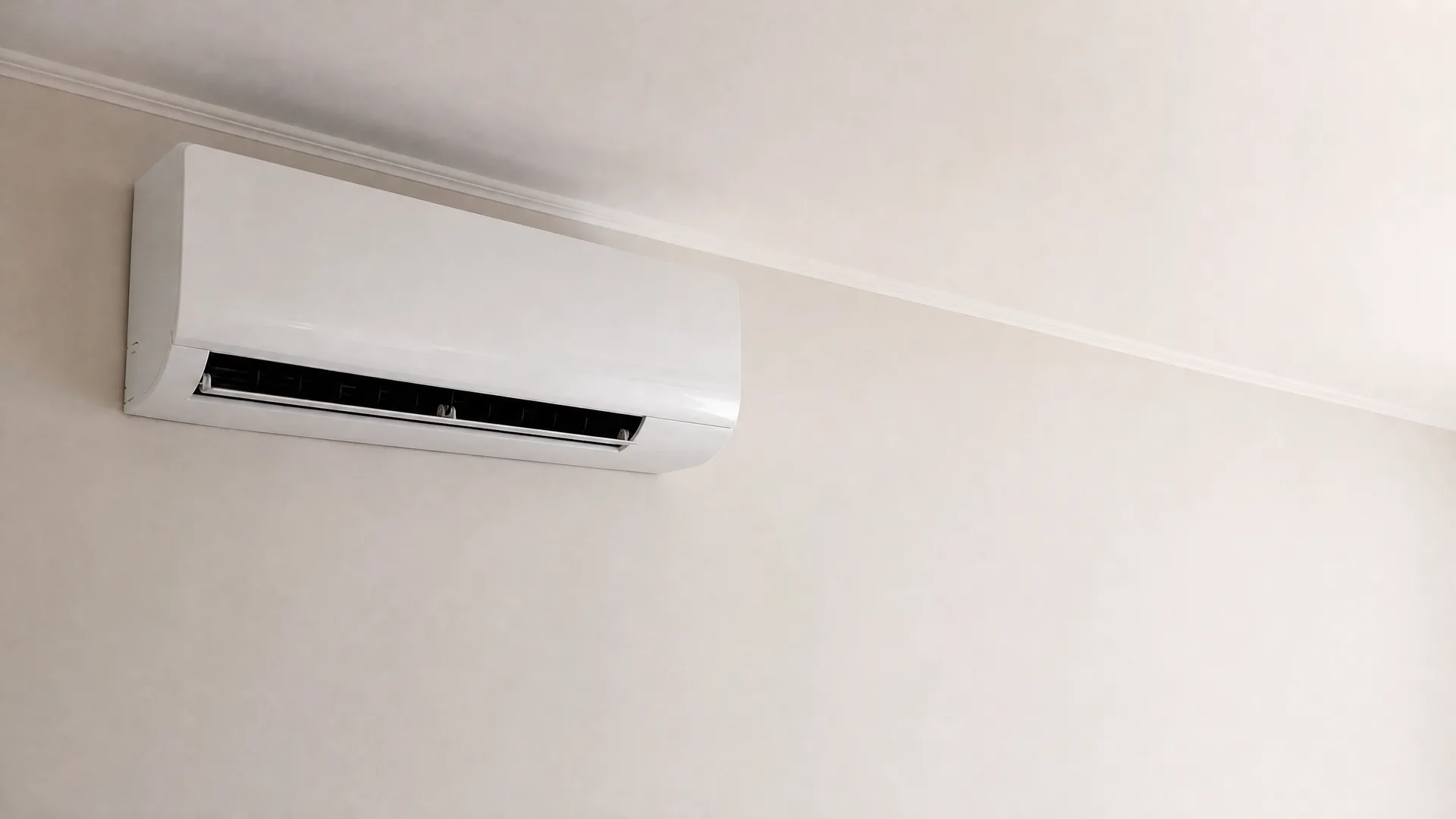
A white wall-mounted mini-split air conditioner installed high on a beige interior wall near the ceiling molding, with a light curtain and curtain rod at the left edge.

Running clean

No frost anywhere on the unit. Air comes out warm at the vent, and the outdoor coil stays clear even on the coldest nights. This is how it should look from October through the end of winter, no matter how low the temperature drops outside.


A wall-mounted mini-split air conditioner indoor unit with a discolored cream plastic casing and dusty outlet vanes, installed high on a plain light-colored interior wall near the ceiling.

Iced over

The casing has yellowed with age and the coil behind it is carrying a buildup of ice. Warm air slows down or stops coming through the vent. Left alone, that ice keeps the unit from pulling heat from the outside air, and it has to work harder for less warmth in the house.

A woman with dark hair in a bun wearing a cream knit sweater sits on a gray sofa in a bright living room, looking off to the side.
A woman wrapped in a knit blanket sits on a gray sofa in a living room, looking toward a bright window with houseplants and an armchair in the background.
A woman in a gray cowl-neck sweater sits on a light sofa with cushions, smiling and looking to the side, with a kitchen and window visible behind her.
A woman with dark hair in a bun, wearing a light linen shirt, sits on a sofa and looks to the side, with a window, houseplants and a kitchen with pendant lights blurred behind her.

How Defrost Mode Actually Works

  • A mini split heats by running its outdoor coil cold enough to pull warmth out of the outside air, so frost can form there same as on a freezer coil.
  • Every system handles this with a defrost cycle: the unit briefly runs backward as an air conditioner to melt the ice off the outdoor coil.
  • During defrost the indoor fan usually slows or stops, which is why the house may feel a short cool draft from the vents.
  • A thin coat of frost that clears within fifteen minutes or so is normal on a cold, damp Maryland night.
  • Ice that stays thick, covers the whole coil, or builds back fast after it melts means the defrost cycle isn't completing the way it should.
  • A failed defrost sensor, a stuck reversing valve, or a low refrigerant charge can all keep the system from switching out of defrost mode properly.

Your mini split heats the house by moving warmth from outside air into the refrigerant, even when it's cold out. To do that, the outdoor coil has to run colder than the air around it. On a damp Maryland night, that cold coil collects moisture out of the air the same way a glass of ice water sweats, and that moisture freezes onto the metal. Every mini split is built to deal with this. The control board checks the coil temperature on a timer, and when it senses enough frost buildup, it switches the system into a short defrost cycle. For a few minutes, the unit runs the opposite direction, like an air conditioner, which sends warm refrigerant through the outdoor coil and melts the ice off. The indoor fan usually cuts back or shuts off during this, since blowing air across indoor coils that are briefly running cool would feel like a cold draft. Once the coil clears, the system switches back to heating and the fan comes back up to speed. A light frost that melts away in ten or fifteen minutes is the system doing exactly what it's supposed to do. The problem shows up when the ice doesn't fully clear, or comes back thicker within the hour. That pattern means the defrost cycle is starting but not finishing the job, and the coil keeps losing ground against the cold.

Power costs 19.53 cents per kilowatt-hour statewide

At 19.53 cents per kilowatt-hour, every hour your mini split runs backward to clear frost is an hour it's not warming your house. A unit icing up and defrosting over and over pulls more power to do the same job, and that shows up on your bill before you ever notice the ice.

EIA-861 2025 statewide residential average

A mini split clears frost in a few minutes and goes back to heating. If the ice is back within an hour or two, the defrost cycle isn't the problem.

Something is keeping the coil colder than it should get, usually low refrigerant, a failing sensor, or a fan that's slowed down. A contractor needs to find which one before the ice stops coming back.

An older woman with short gray hair in a cream cable-knit turtleneck sweater smiles while looking to the side in a wooden kitchen, with a round loaf of bread on a board in the foreground and a lit candle by a dark window.
A woman and a child wrapped together in a thick knitted blanket on a sofa, both with eyes closed, with a lit table lamp and houseplant in the dim background.

Ice that won't quit

If frost keeps coming back within an hour or two of clearing, the mini split is losing the fight. A contractor can find out why before it stops heating the house at all.

Hand off my repair

Running on electric heat strips

A mini split that can't keep up with ice starts leaning on backup heat, and at Maryland electric rates that costs more to keep the house warm the same amount.

Hand off my repair

Normal Frost or Ice That Means Trouble

Normal frost

  • A thin, even layer of white frost across the coil that disappears within ten minutes as the unit runs its defrost cycle.
  • The outdoor fan stops and restarts on its own, and you might hear a hiss or a change in sound for a few minutes.
  • After defrost, the coil is wet or steaming instead of icy, and the cycle doesn't repeat again for at least an hour.
  • This happens more on humid, near-freezing nights when there's more moisture in the air for the coil to pull in.
  • The house keeps getting warm air at the indoor vent the whole time, even during the few minutes defrost is running.

Ice that means trouble

  • Thick, solid ice building up on the coil, the refrigerant lines, or the base of the outdoor unit instead of a thin frost layer.
  • The ice comes back within an hour of clearing, or never fully clears before the next defrost cycle starts.
  • The indoor vent starts blowing cool or lukewarm air instead of warm, even though the unit is still running.
  • The outdoor fan has stopped turning, or ice has built up around it enough to keep the blades from spinning freely.
  • The unit runs constantly without the usual pause and restart pattern that a normal defrost cycle has.
  • Your electric bill climbs even though the house doesn't feel any warmer than it did the month before.
A dusty white wall-mounted mini-split air conditioner installed high on a beige interior wall below a molded ceiling trim.
Before you get your mini split repair
A white wall-mounted mini-split air conditioner unit installed high on a light gray interior wall near the ceiling, with a white-framed window and green foliage visible at the left edge.
After you get your mini split repair

A mini split pro near you

You've already checked the coil and you know this isn't the thin frost that clears on its own. Ice that keeps coming back, or a unit leaning on electric heat strips to keep up, isn't something to watch through the rest of winter. Maryland winters run long enough that a mini split working against itself adds up fast on an electric heat bill, and at over 19 cents a kilowatt-hour that cost keeps coming whether the problem gets fixed in December or March. A contractor can get a gauge on the refrigerant charge and check the sensors and defrost board in one visit, the kind of look that tells you in minutes what's actually wrong instead of guessing room by room. You don't have to figure out which part it is before you ask. Send the request and let someone who does this for a living take over from here, while you stop checking that outdoor unit every cold morning wondering if today's the day it stops keeping up.

Two-story house with beige horizontal siding, gray shingled gable roofs and a covered front entry, with an outdoor air conditioning unit beside it and a partly dry grass lawn in front under a clear blue sky.

That 64°F dew point is a summer number, but it points to the same coil that ices up on you in January. Maryland summers push heavy, sticky air across that outdoor coil for months, and whatever moisture collects there works into the metal and the fin surfaces over time. A coil that's been fighting humidity all summer doesn't shed frost as cleanly once the cold sets in. If your unit is icing up more than a system a few years newer, or holding frost longer than it used to, summer here is part of why. NOAA

NASA POWER T2MDEW county cells weighted by homes

A woman stands in the open black front door of a white-sided house with a dark shingled roof while a man in a navy jacket approaches along the walkway, with lantern wall lights, a potted shrub, and flowering garden beds nearby.

What a frozen mini split means for your house

A mini split that can't shed its ice falls back on electric heat strips to keep the rooms warm, and those strips are the most expensive way to heat a Maryland house. You'll feel it as a bill that jumps before you ever see the unit struggling outside. Meanwhile the air coming out of the vents runs cooler than usual, so the rooms it heats start to lag behind, especially the ones furthest from the unit.

Left alone, this doesn't stay a once-in-a-while problem. The coil keeps icing, the system keeps working harder to compensate, and at some point in the middle of a cold snap it stops keeping up at all. You don't have to figure out whether it's the refrigerant charge, a sensor, or the defrost board yourself. Once you send in what you're seeing, a contractor who handles this equipment in Maryland homes gets in touch, and finding the answer becomes their job instead of yours.

A gray upholstered sofa with a beige cushion and knit blanket beside a curtained window, with a white mug and a book on a dark wooden table in the foreground and a lit lamp in the background.
A white wall-mounted mini-split air conditioner indoor unit installed high on a plain beige wall near the ceiling.

A coil that's losing the battle

Ice spreads past the coil onto the pipes and the base of the unit, and it's thicker than frost, more like a shell. The defrost cycle runs but can't keep up, so by the next time you check, the ice is back and heavier than before. The outdoor fan may struggle to turn at all. Inside, the air at the vent feels cooler than it should, because the unit is spending more of its time fighting ice than moving heat into your house.

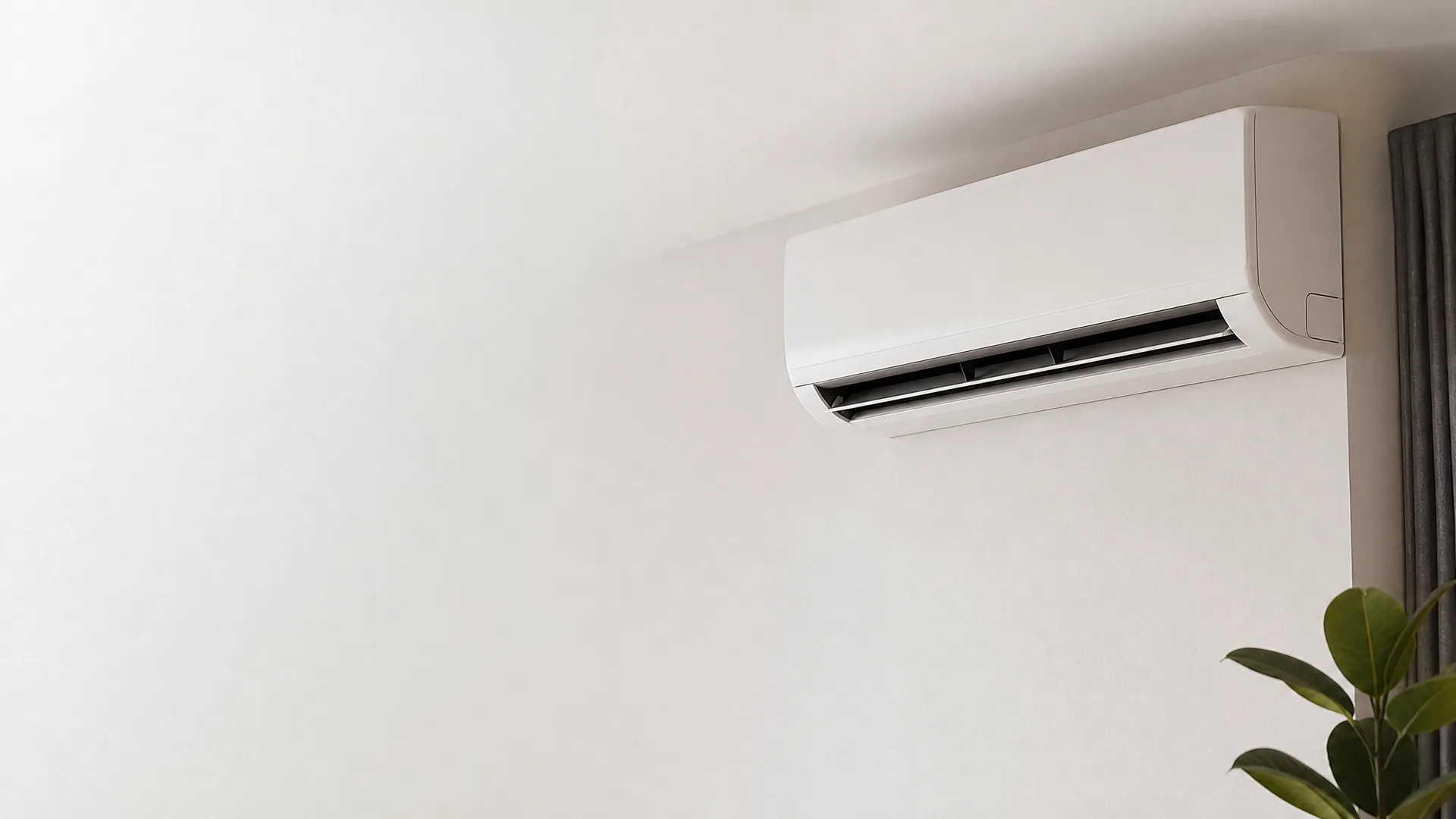
A white wall-mounted mini-split air conditioner unit near the ceiling of a plain white wall, with a gray curtain at the right edge and green plant leaves in the lower right corner.

What it costs you to wait

A mini split that can't clear its coil leans harder on backup electric heat strips to keep rooms at temperature, and strips draw far more power than the compressor does. You'll see that on your bill before you see the unit fail outright. Left alone through a full Maryland winter, a coil that ices over repeatedly is also a coil that corrodes faster, which turns a repair now into a bigger one later, once the rooms you're trying to keep warm start falling behind.

A mini split that clears a thin frost and keeps heating is doing what it's built to do. One that keeps icing up, or leans on electric heat strips to get the house warm, is telling you something is wrong with the coil, the sensor, or the refrigerant charge, and it won't fix itself. Left alone through a Maryland winter, that unit either stops heating altogether or runs up a bill on strip heat the whole season. None of that is something to watch and wait on. Once you send the form, you're done looking for someone to call. A contractor who knows these systems takes it from there, and the ice on that outdoor unit stops being your problem to solve.

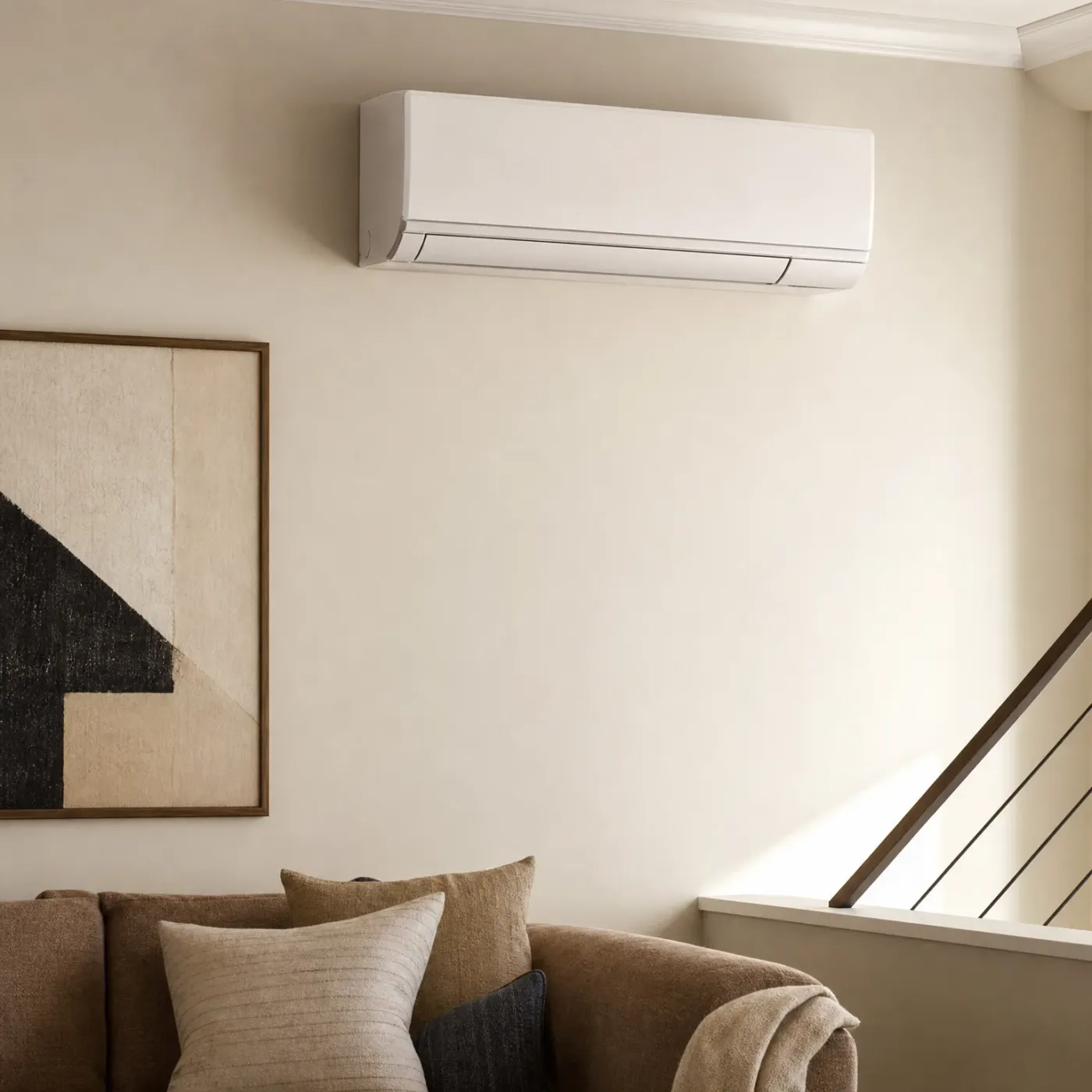
A white wall-mounted mini-split indoor unit high on a beige interior wall, above a brown sofa with cushions and a throw, beside a framed abstract artwork and a stair railing.

A local pro for your mini split repair

Get matched

Send the request and finding a pro stops being your problem.

Asking costs nothing, and the choice to hire stays yours.