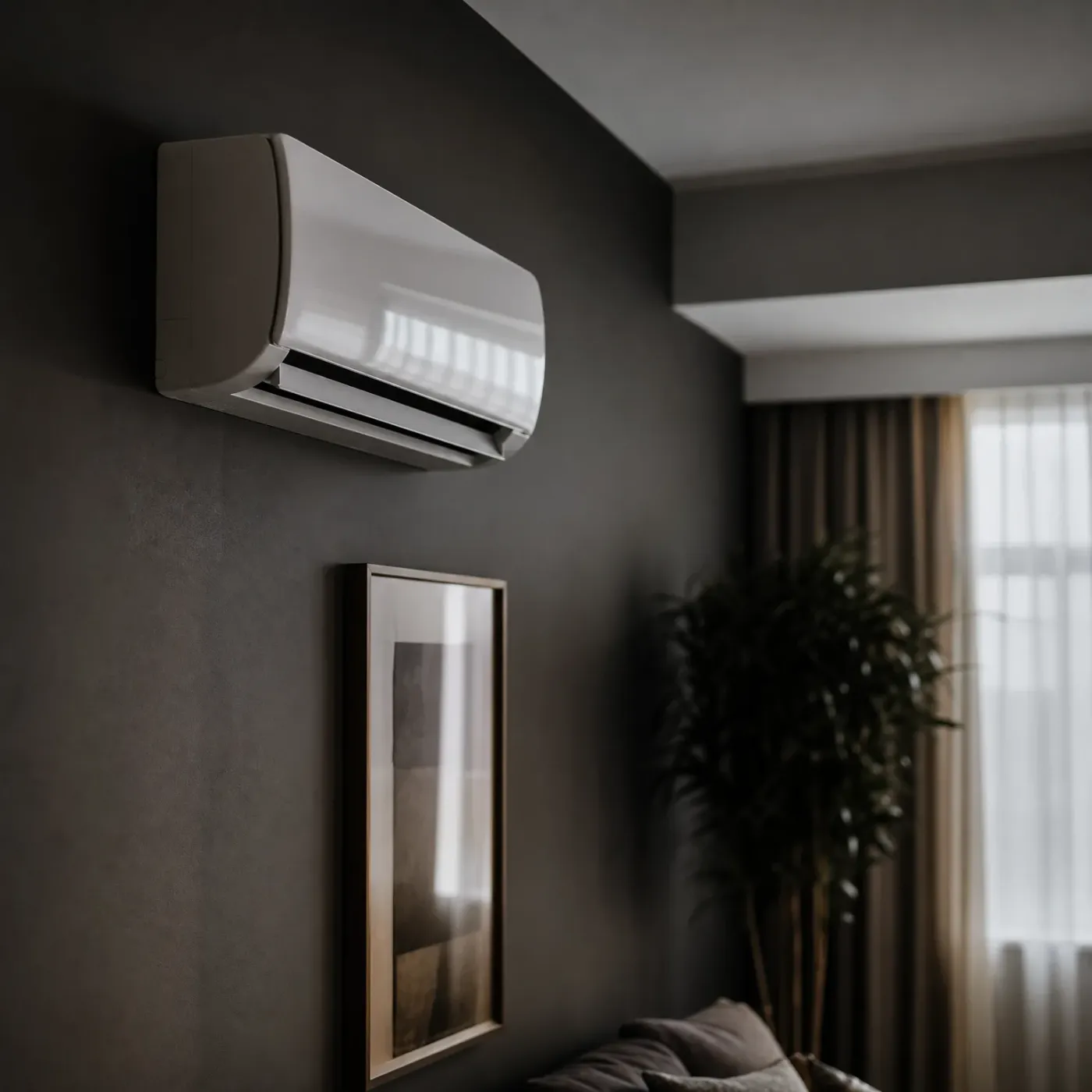






A white wall-mounted mini-split air conditioner on a dark gray interior wall above a framed picture, with a potted plant and curtained window to the right.

A local pro for your mini split repair

Why your mini split won't turn on in a Maryland winter

A mini split that won't turn on when it's cold out usually comes down to a handful of causes: a frozen outdoor coil, a tripped breaker, a bad control board, or low refrigerant. This page walks through what to check first and what tends to fail in a Maryland winter. If you want a local contractor who works on these systems all season to take a look, you can get matched with one below.

Get a mini split pro

A mini split that won't turn on in a Maryland winter is usually icing up faster than it can clear itself. Mini splits run a defrost cycle to melt frost off the outdoor coil, switching briefly to cooling mode to do it. On a night that drops into the 20s, frost can build faster than the unit can keep up, and if the defrost cycle can't finish the job, the system locks out rather than run with a frozen coil. A tripped breaker, a blown fuse, or a control board that's failed can look the same from inside your house: you flip it on and nothing happens. Low refrigerant will often show up the same way in cold weather, since a system already short on charge struggles hardest when it's working against the lowest outdoor temperatures. Any of these needs a look from someone who can get the cover off and test the parts, not just reset the thermostat.

A white wall-mounted mini-split indoor unit installed high on a gray interior wall, with a window at left and part of a light gray sofa with a dark cushion at lower right.
A mini split like this is clearing frost on its own and starting back up each time without you noticing.
A white wall-mounted mini-split air conditioner indoor unit with visible dust and staining along its lower vent, installed on a plain pale wall.
Dirt and mold on the coil and vents block airflow, and a unit that can't breathe can't defrost itself.

How the defrost cycle actually works

  • The defrost cycle only runs when a sensor on the outdoor coil reads near freezing, not on a timer alone.
  • During defrost, the reversing valve switches the system to cooling for a few minutes, which is why the indoor unit can feel cold or blow no air.
  • A fan that keeps spinning during defrost pulls in cold air and can stop the coil from warming enough to melt the frost.
  • If the outdoor unit sits low to the ground or under a roofline, snow and ice can block the coil before defrost ever gets a chance to work.
  • A failed defrost sensor or control board can leave the system stuck in heating mode while frost keeps building on the coil.
  • Once ice covers the coil enough, the unit may shut itself down rather than run through a cycle it can't complete.

The outdoor unit has a sensor on its coil that watches the temperature there, not the air temperature and not a clock. When that sensor reads near freezing, the system reverses itself for a few minutes, running like an air conditioner so the coil gets warm enough to melt the frost on it. That's the whole mechanism. It's also why someone standing next to the indoor head during defrost thinks something's wrong, because the air blowing out can turn cold or stop blowing for a few minutes. It's doing what it's supposed to do.

Where it breaks down is usually one of two places. The outdoor fan is supposed to slow way down or stop during defrost so the coil can hold heat. If it keeps running full speed, it pulls in cold air faster than the coil can warm up, and the cycle ends without clearing all the frost. Over a few cycles that adds up. The sensor itself can fail too, or the control board reading it can, and if that happens the system never gets the signal to switch over at all. Frost keeps building with nothing to stop it.

Either way, once the coil is iced over enough, airflow through it drops to almost nothing, and a unit in that state will often shut down on its own rather than try to run through a defrost cycle it can't finish.

A gray-haired man in a dark sweater sits on a light gray sofa in a living room, looking toward a sunlit window with trees outside.
A gray-haired man in a dark blue sweater sits on a light gray sofa in a sunlit living room, looking off to the side, with a potted plant, shelving unit, and large glass doors behind him.
A bearded man with graying hair in a dark green sweater sits on a sofa in a living room, looking off to the side, with a sliding glass door and a dim kitchen doorway behind him.
A gray-haired man in a dark knit sweater sits on a light gray sofa in a living room, looking toward a sunlit window, with houseplants, a lamp, and framed art in the background.

What a healthy defrost looks like

A mini split in good shape clears its coil in a matter of minutes. The outdoor fan stops, the valve switches, the frost melts, and the system goes back to heating before you'd think to check it. You might notice the indoor unit pause or blow cool air for a moment and nothing more. If your unit has been doing that quietly for a couple of winters without tripping a breaker or shutting down, the defrost side of it is working the way it's supposed to.


What a failing one looks like

A unit that can't keep up starts defrosting more often and for longer each time, because it's clearing more ice than a normal cycle removes. Some nights it loses the race entirely and the coil stays iced over. A breaker that trips during or right after defrost, or a unit that comes back on but won't hold heat, points to a part wearing out rather than just a cold snap. That's a difference a contractor who works on these year-round in Maryland can usually spot fast.

A woman with shoulder-length brown hair wearing a beige knit cardigan sits in a gray upholstered armchair near a window, looking off to the side with a slight smile, with bookshelves blurred in the background.
A woman and a child wrapped together in a knitted gray blanket on a couch, with the child's head resting on her shoulder and a lit table lamp and houseplant in the background.

Get the right pro for your mini split

A mini split that won't restart on a cold Maryland night isn't always something you can thaw out by waiting. If the defrost cycle isn't finishing, or the outdoor coil stays iced, or a control board has failed, that's a repair, not a reset. Running it anyway while you're not sure what's wrong can wear on a compressor that was already struggling, and electric heat backup running in its place costs more the longer it sits broken. Maryland winters ask a lot of this equipment, and whoever looks at yours should already know what tends to go first on units that handle this weather every year. Someone local who works on mini splits all winter has seen this particular failure before, on homes around you, and knows where to look first instead of guessing. One contractor gets your request, not five, so you're dealing with a single visit from someone who actually knows this system, not fielding calls while your heat is down.

A white wall-mounted mini-split air conditioner installed high on a light gray interior wall below a white crown molding and ceiling with a recessed light.

Running the way it should

A unit like this is cycling through defrost on its own, clearing the coil and going back to heating before you'd notice. The casing stays clean, the vents open and close on command, and the room keeps warm through the night.

A dusty, discolored white wall-mounted mini-split air conditioner unit installed on a plain beige interior wall below a molding strip.

Running into trouble

Dust and grime built up like this on the casing often means the same buildup is sitting on the coil behind it. A coil caked with dirt can't shed frost fast enough in the cold, and a unit that can't clear itself won't come back on.

A dusty, discolored white wall-mounted mini-split air conditioner unit installed high on a plain interior wall below a white ceiling molding.
Before you get your mini split repair
A white wall-mounted mini-split air conditioner on a beige interior wall, with a cream curtain and window at left, a potted plant on a ledge at right, and a wood floor below.
After you get your mini split repair
A two-story cream-colored house with horizontal siding and a gray hipped roof, flanked by large green trees and shrubs, with a concrete walkway crossing a lawn to a wet street in the foreground.

Maryland summers run a dew point near 64°F across June, July and August, averaged for where homes here sit. (NOAA climate normals) That's heavy, sticky air, and it's the air your mini split's outdoor coil has to pull moisture out of all summer long. Coils that work that hard picking up humidity also pick up dirt and mold faster, and a coil coated like that can't shed heat the way it should. Come winter, that same coil has to shed frost instead, and one that's still caked in grime from summer has a harder time clearing it. If your unit struggled to keep up on muggy August nights, it's worth having the coil checked before the cold sets in.

NASA POWER T2MDEW county cells weighted by homes

Call someone or wait on it

Call for repair

  • A licensed tech who works on mini splits all winter knows which Maryland brands and models tend to ice up and why.
  • A control board or defrost sensor gets tested properly instead of guessed at, so the fix addresses what actually failed.
  • You get matched with one local contractor, not a handful of companies calling you back at once.
  • A unit that's stuck in defrost or won't restart gets diagnosed instead of left running in a state that can strain the compressor.
  • Someone who handles this equipment regularly has likely already seen whatever's wrong with yours this season.

Wait it out

  • If the outdoor coil is only lightly iced, the unit may clear it on its own during its next defrost cycle.
  • Waiting costs nothing up front, but a control board or sensor that's actually failed won't fix itself overnight.
  • Each night it can't restart in the cold is a night without heat from that unit, with electric heat prices in Maryland not cheap to fall back on.
  • A frozen coil left alone can keep building ice instead of melting, especially on a run of nights in the 20s.
  • Running a unit that can't complete defrost risks the compressor, turning a sensor problem into a bigger repair.
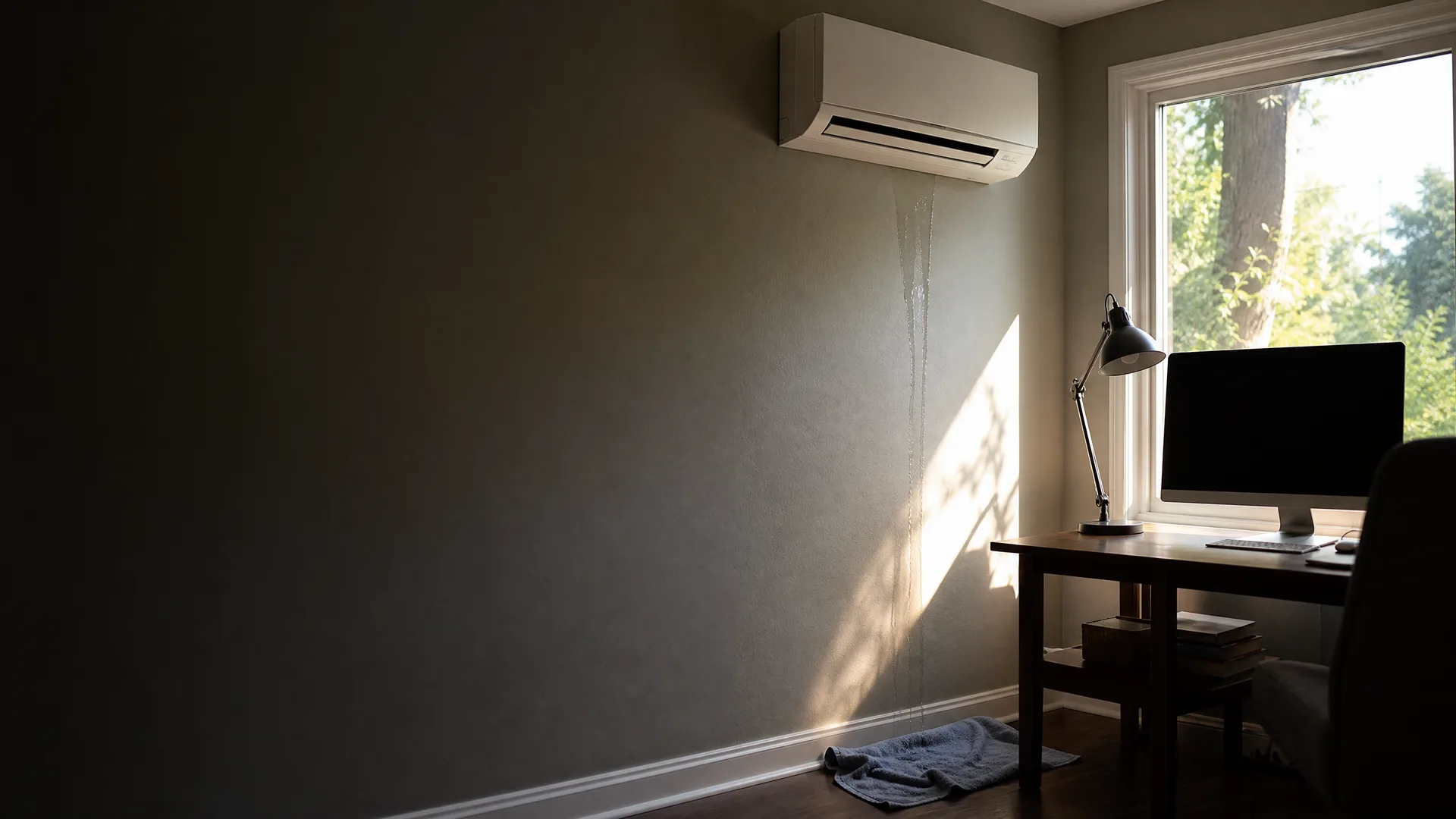
A wall-mounted mini-split air conditioner leaking water down a dim gray wall onto a towel on the floor, beside a window with a desk, lamp and monitor.

You're at your desk in the home office on a July afternoon, the mini split humming against the Maryland heat, when you notice the wall under the indoor unit has gone dark. A streak of water is running down the drywall, pooling at the baseboard. You grab a towel and drop it on the floor to catch the rest before it reaches the rug. The unit is still blowing cold air, so it doesn't look broken, just wrong. You stand there a second, trying to remember if this happened last summer too, before you go find something drier to put down.

Power costs 19.53 cents per kilowatt-hour statewide

At 19.53 cents a kilowatt-hour, a mini split that keeps tripping into defrost or short-cycling on a cold night runs up your bill fast, since most Maryland homes already lean on electric heat. A unit stuck failing to restart isn't just inconvenient, it's burning power while it struggles.

EIA-861 2025 statewide residential average

A man in a dark blue shirt stands in an open front doorway of a stucco and wood-clad house, facing a blond woman seen from behind in the foreground on a stone walkway.

A mini split that won't restart is telling you something specific

A frozen coil, a tripped breaker, a failed control board, low refrigerant. One of those is why your mini split won't come back on tonight, and which one matters, because the fix for an iced coil isn't the fix for a bad board. Waiting it out works sometimes. When it doesn't, the unit needs someone who can test the defrost sensor and the board rather than guess.

That's where a local contractor earns the call. Someone who services mini splits through a Maryland winter has seen which brands ice up on a 20-degree night and which control boards tend to go first, and that experience is what turns a guess into a diagnosis. Ask for the repair and you'll be matched with one licensed contractor local to you, not a handful competing for your number. They'll reach out and look at your specific unit, in your house, on your street.

Interior corner of a dining room with a round wooden table, a ceramic vase holding olive branches, a dark spindle-back chair near a curtained window, and a sideboard with a lamp against beige walls.
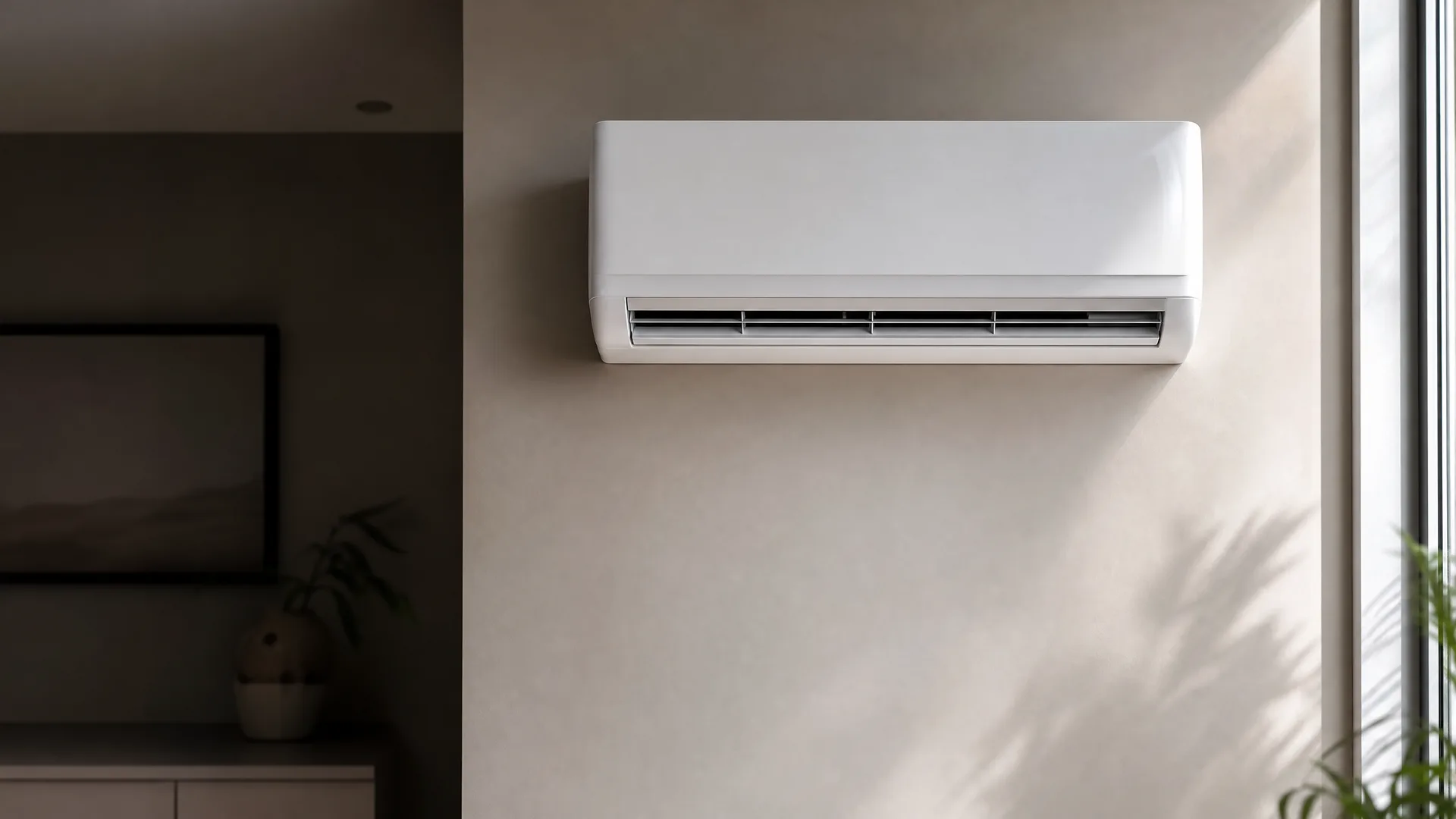
A white wall-mounted mini-split air conditioner on a plain beige interior wall, with a framed picture and potted plant in the dim left background and sunlit window with foliage at right.

A pro who works on mini splits

Step 1 of 3: Equipment